
 By
By There are moments in life that are difficult to explain, not because nothing happened, but because so much happened inside you at once.
For me, the Day of Arafat during Hajj 2026 was one of those moments.
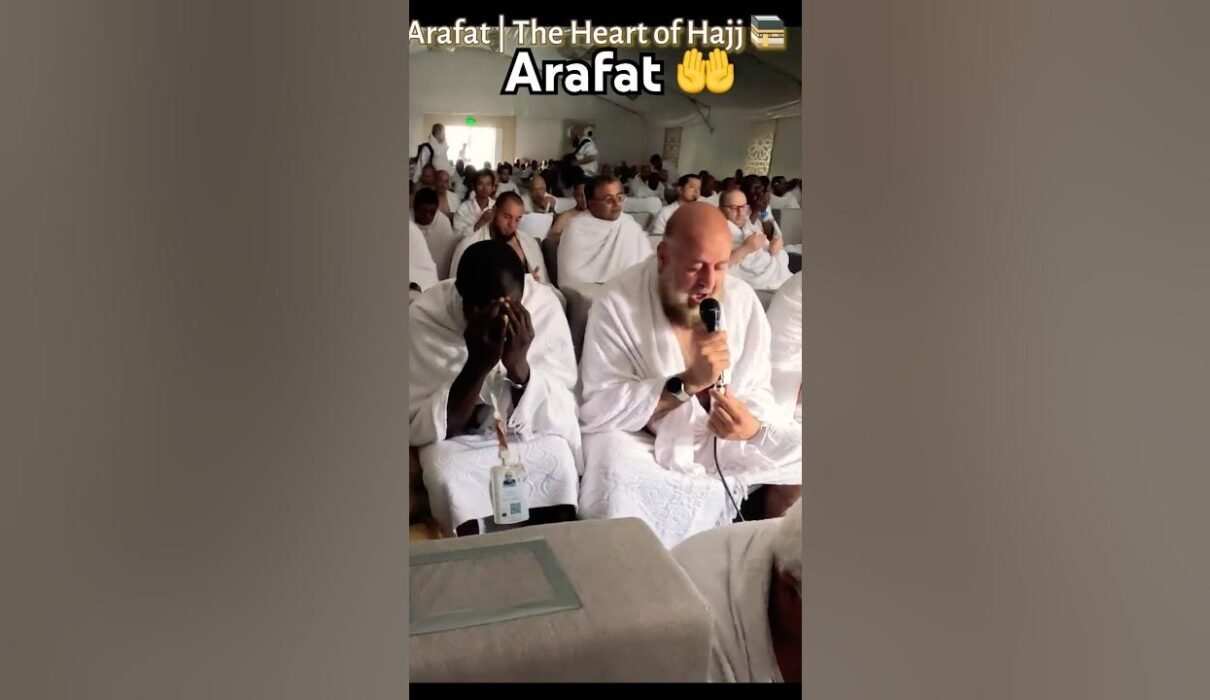
Standing on the plains of Arafat, surrounded by hundreds of thousands of pilgrims, I began to understand why this day holds such a unique place in the hearts of Muslims. It is not simply another day of Hajj. It feels like a pause from everything else — a moment when the noise of ordinary life fades and your attention turns toward Allah.
Arriving at Arafat
The journey to Arafat carries a feeling of anticipation that is difficult to put into words.
After the movement and activity surrounding the earlier stages of Hajj, arriving at our Arafat camp felt like entering a completely different chapter of the journey. The tents were prepared, the arrangements were organized, and there was an incredible amount of work taking place behind the scenes to accommodate the enormous number of pilgrims.
Looking around, I found myself thinking about the scale of what was happening.
Millions of people had gathered in one place, yet each person had arrived carrying something deeply personal — a hope, a regret, a prayer, a hardship, a dream, or a request they had perhaps been making to Allah for years.
And despite all those individual stories, everyone was there for the same reason.
To turn toward Allah.
The Precious Hours of Arafat
One of the most striking things about Arafat is how quickly the hours seem to pass.
You know that your stay is limited. There is a sense that every moment matters, and that awareness changes the way you experience the day.
There is no need for entertainment or distraction. The purpose is simple: worship, remembrance, dua, reflection and seeking forgiveness.
Yet simplicity does not mean the experience is empty. Quite the opposite.
The hours become filled with thoughts and emotions.
You remember the blessings you often take for granted. You think about the people you love. You remember mistakes you wish you could undo. You ask Allah for forgiveness. You make dua for your family, your future and for people facing difficulties around the world.
And sometimes, you simply sit quietly.
You don’t need to say everything out loud.
Allah already knows what is in your heart.
A Crowd of Millions, Yet a Personal Experience
Perhaps one of the most beautiful things about Arafat is the diversity of the people around you.
Pilgrims come from different countries, speak different languages and have completely different life stories. Their clothing, cultures and circumstances may be different, but on this day those differences seem to disappear.
Everyone is standing before the same Creator.
Looking across the gathering, it becomes clear that Hajj is much bigger than an individual journey. It is a reminder of the unity of the Muslim Ummah.
People who may never have met one another before are sharing the same sacred space, facing the same direction and asking Allah for mercy.
There is something deeply humbling about being part of that.
The Silence Between the Prayers
Arafat is not necessarily about constant activity.
Some of its most powerful moments can come in the quiet.
The sound of people making dua. The recitation of the Qur’an. The occasional movement around the tents. The voices of pilgrims speaking softly with one another.
And then there are moments when everything seems to become still.
Those moments give you space to think.
Hajj has a way of making you look at your life differently. Things that once seemed extremely important can suddenly feel insignificant. You begin thinking less about what you own and more about what you have been given.
You think about how quickly life passes.
You think about the people who are no longer here.
You think about the person you want to become.
And most importantly, you think about your relationship with Allah.
Making Dua With a Different Kind of Heart
Dua at Arafat feels different.
Perhaps it is because you know exactly where you are. Perhaps it is because you are surrounded by millions of other people doing the same thing. Or perhaps it is simply the realization that you have been given an opportunity that so many people dream about.
You find yourself asking for things you may not normally ask for.
Forgiveness.
Guidance.
Mercy.
Peace.
A stronger relationship with Allah.
Goodness for your parents and family.
And sometimes, you find yourself making dua for people you have never met.
The atmosphere encourages you to look beyond yourself.
It becomes less about asking for worldly things and more about asking Allah to change your heart, forgive your shortcomings and accept your worship.
Arafat Changes Your Perspective
Before experiencing Arafat, it is easy to think of Hajj mainly in terms of its physical journey — travelling between sacred places, walking long distances, following the rituals and managing the practical challenges that come with such a massive gathering.
But Arafat reminds you that Hajj is ultimately an inward journey too.
You may arrive physically exhausted, but spiritually you can feel more awake than ever.
You are confronted with your own life.
What have you done with the time Allah has given you?
What mistakes do you need to leave behind?
What blessings have you failed to appreciate?
What kind of person do you want to be when you return home?
Those questions stay with you.
The Blessing of Simply Being There
One of the strongest emotions I felt throughout the experience was gratitude.
Gratitude for being able to perform Hajj.
Gratitude for being healthy enough to make the journey.
Gratitude for the people who helped make it possible.
And gratitude for being able to stand in a place that carries such immense significance in Islamic history.
There are millions of Muslims who dream of reaching Makkah and standing at Arafat one day.
To actually be there is a blessing that can be difficult to fully comprehend while you are experiencing it.
Sometimes you only begin to appreciate the magnitude of a moment after it has passed.
Leaving Arafat
Eventually, the time comes to leave.
And perhaps that is when you realize how quickly the day went.
You arrived knowing that the hours were limited, but while you were there, it felt as though you had stepped outside your normal sense of time.
Leaving Arafat does not feel like simply leaving a location.
You carry something with you.
Memories of the people around you.
The prayers you made.
The emotions you experienced.
The moments when you cried.
The moments when you felt grateful.
The thoughts that came to you when you were finally able to slow down and reflect.
And the hope that Allah accepted it all.
What Does Arafat Really Feel Like?
If someone asked me to describe Arafat in one word, I don’t think I could.
It feels humbling.
It feels overwhelming.
It feels peaceful.
It feels emotional.
It feels incredibly small and incredibly significant at the same time.
But above all, it feels like an opportunity to return to Allah.
You arrive carrying the weight of your life, and for a few precious hours, you are given the space to put that weight down and simply ask for mercy.
That is what makes Arafat so unforgettable.
The tents eventually come down. The crowds move on. The roads become quieter.
But the experience stays with you.
Long after you have left the plains of Arafat, you remember what it felt like to stand there and raise your hands in dua.
And perhaps that is the real beauty of the Day of Arafat.
It does not end when you leave.
It becomes a part of you.
May Allah accept the Hajj of every pilgrim, accept every sincere dua, forgive our sins, shower us with His mercy and invite every Muslim who dreams of visiting the sacred lands. Ameen.