
 By
By There are moments during Hajj that are difficult to describe with words. The scale of the gathering, the emotions on people’s faces, the diversity of cultures, and the sense of brotherhood all come together to create memories that stay with you long after the journey is over.
During Hajj 2026, Mina offered one of those unforgettable moments.
After several deeply intense days of worship and reflection, the atmosphere around Mina began to change. The days of Arafat, Muzdalifah, and the stoning of the Jamarat had brought millions of pilgrims through some of the most significant moments of their spiritual journey. Yet, amid the tiredness and crowds, there was also a noticeable feeling of happiness and celebration.
It felt like Eid had arrived not only on the calendar, but also in the hearts of the pilgrims.
A Different Atmosphere in Mina
Walking from the Jamarat area back toward Mina on the second day of Jamarat, the surroundings seemed noticeably different.
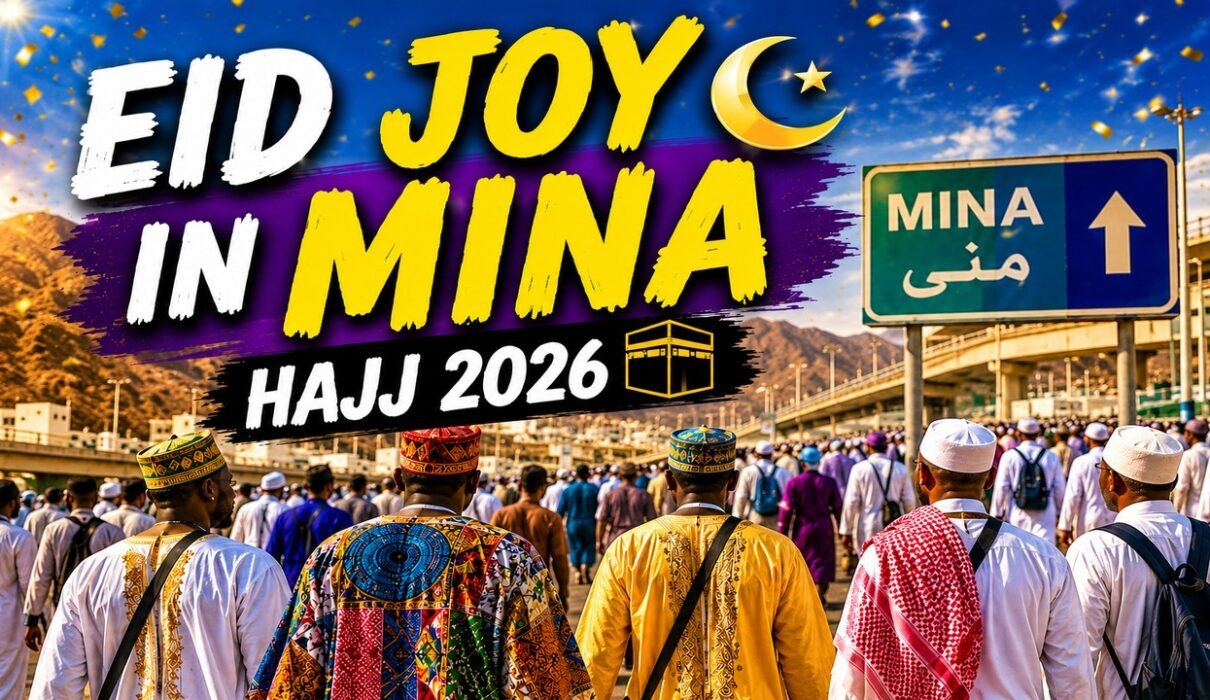
The familiar sight of pilgrims dressed in white Ihram was gradually being replaced by a remarkable variety of colors and styles. Many pilgrims had completed important stages of their rituals and were now wearing fresh clothes for Eid.
Suddenly, the enormous gathering looked even more diverse.
White garments gave way to colorful robes, beautifully patterned clothing, traditional outfits, and styles representing communities from every corner of the Muslim world. It was a powerful reminder that Hajj brings together people who may live thousands of miles apart but share the same faith.
Among the most striking sights were the traditional clothes worn by many African pilgrims. Their vibrant colors, distinctive patterns, and cultural styles added a special beauty to the streets and pathways around Mina.
Every group seemed to carry a small part of its homeland with them.
The Colors of the Muslim World
One of the most beautiful things about Hajj is seeing how many cultures can exist together without losing their individual identities.
A pilgrim from Africa may walk beside someone from Asia. A family from Europe may share a space with pilgrims from the Middle East. People from South Asia, Southeast Asia, Central Asia, the Americas, and countless other places all become part of the same extraordinary gathering.
The languages may be different.
The food may be different.
The clothing may be different.
The customs and traditions may be different.
Yet, beneath all those differences is something much greater that connects everyone.
They are all Muslims, gathered in the same sacred journey, facing the same challenges and worshipping the same Creator.
That unity becomes especially visible during Hajj.
From the Hardship of Hajj to the Happiness of Eid
Hajj is not an easy journey.
The long walks, heat, crowded roads, limited rest, and physically demanding rituals require patience and perseverance. The journey through Arafat, Muzdalifah, Mina, and Jamarat can leave pilgrims exhausted, but it can also create a profound sense of gratitude.
After experiencing those demanding days, the arrival of Eid carries a special emotional meaning.
The fresh clothes, smiling faces, greetings between pilgrims, and colorful surroundings create an atmosphere that feels completely different from the earlier stages of the pilgrimage.
People who had spent days focused on worship and endurance could now enjoy a moment of celebration.
The joy was not simply about wearing new clothes or marking a festival.
It was the joy of completing important parts of a once-in-a-lifetime spiritual journey.
Mina: Where Cultures Meet
Mina is already one of the most recognizable locations associated with Hajj, with its vast rows of tents and the constant movement of pilgrims.
But during Eid, the human side of Mina becomes particularly fascinating.
Walking through the area can feel like walking through a living map of the Muslim world.
Traditional African garments stand beside South Asian clothing. Arab styles appear alongside outfits from Southeast Asia. Different colors, fabrics, head coverings, and cultural traditions create an incredible visual mixture.
Yet there is no sense that these differences divide the pilgrims.
Instead, they become part of the beauty of the gathering.
Everyone brings something unique, but everyone belongs to the same Ummah.
More Than a Celebration
The scenes of Eid in Mina offer a lesson that goes beyond the beauty of traditional clothing.
Hajj demonstrates that Islam has never been limited to one nationality, one language, or one culture.
A person does not need to abandon their heritage to become part of the Ummah. Instead, Hajj shows how different cultures can come together while remaining beautifully distinct.
That is one of the most moving aspects of the pilgrimage.
A person can look completely different from the pilgrim walking beside them, speak another language, come from another continent, and have completely different traditions—but they can still stand together as brothers and sisters in faith.
One Hajj, Millions of Stories
Every pilgrim in Mina has a story.
Some may have saved for years to make the journey. Others may have traveled across oceans and continents. Some may be experiencing Hajj for the first time, while others may have waited a lifetime for the opportunity.
Behind every face is a personal journey of sacrifice, hope, prayer, and faith.
When Eid arrives, all of those individual stories become part of one enormous celebration.
The colorful clothes are not merely beautiful to look at. They represent homes, families, nations, histories, and cultures. Together, they create a picture of the worldwide Muslim community that is almost impossible to experience anywhere else.
A Powerful Reminder of Unity
Perhaps the most beautiful message from Eid in Mina is that diversity does not have to mean separation.
Different countries can come together.
Different languages can exist side by side.
Different traditions can be celebrated.
Different cultures can share the same space.
And still, there can be a powerful sense of unity.
Hajj makes that reality visible.
For a short period, millions of people leave behind many of the labels that normally separate societies and gather around a shared purpose. Their nationalities remain, their cultures remain, and their languages remain—but their faith creates a bond that is stronger than those differences.
A Memory to Carry Beyond Mina
As the crowds continue moving through Mina and the rituals progress, the sights and sounds of Eid become memories that pilgrims will carry home.
For many, the experience will remain with them for the rest of their lives.
The sight of people in fresh clothes.
The bright colors of traditional garments.
The smiles exchanged between strangers.
The countless languages being spoken around them.
The feeling of having completed difficult days of worship.
And above all, the realization that they were part of something much larger than themselves.
Mina during Eid is not simply a place filled with pilgrims. It is a glimpse of the global Ummah in all its incredible diversity.
From Africa to Asia, from the Middle East to Europe and beyond, people come together with different backgrounds but one shared faith.
That is what makes the scenes of Eid in Mina so special.
Different countries. Different cultures. Different colors. Different languages.
But one Ummah, one Hajj, and one shared journey of faith. 🤲❤️
May Allah accept the Hajj of every pilgrim, accept their sacrifices and prayers, and allow the memories of these blessed days to remain a source of faith and gratitude long after they return home. Ameen.