
 By
By There are some places you visit for the sights, and then there are places that make you feel as though you have stepped into another century.
Antigua Guatemala is one of those places.
Surrounded by volcanoes and filled with cobblestone streets, colorful colonial buildings, historic churches, peaceful courtyards, and lively plazas, Antigua has an atmosphere that feels remarkably different from the modern world. Walking through the city, it is easy to forget what year it is.
My journey to Antigua began in Panajachel, on the shores of Lake Atitlán. Getting there was not exactly smooth. A stressful race to catch my shuttle reminded me that backpacking rarely goes exactly according to plan. But after finally making the journey, I arrived in Antigua after dark — and the city immediately made the chaos worth it.
Arriving in Antigua After Dark
Antigua has a completely different personality at night.
The streets become softly illuminated, historic buildings glow under streetlights, and the surrounding city takes on an almost cinematic feeling. Instead of rushing from attraction to attraction, I found myself simply wandering.
Music drifted through the streets. Restaurants and cafés were still busy. Travelers gathered around tables while locals went about their evenings. Everywhere I looked, there seemed to be another doorway, church, courtyard, or colorful wall worth stopping to photograph.
It was one of those moments when the destination itself becomes the experience.
A Walk Through Guatemala’s Colonial Past
One of the most fascinating things about Antigua is how much history remains visible in everyday life.
At the center of the city is Parque Central, a natural starting point for exploring the surrounding streets. From here, historic buildings, churches, cafés, and small shops stretch out in every direction.
The Cathedral of San José stands prominently near the park, while other churches and ruins scattered around Antigua reveal how much of the city’s past has survived through earthquakes, reconstruction, and the passing of centuries.
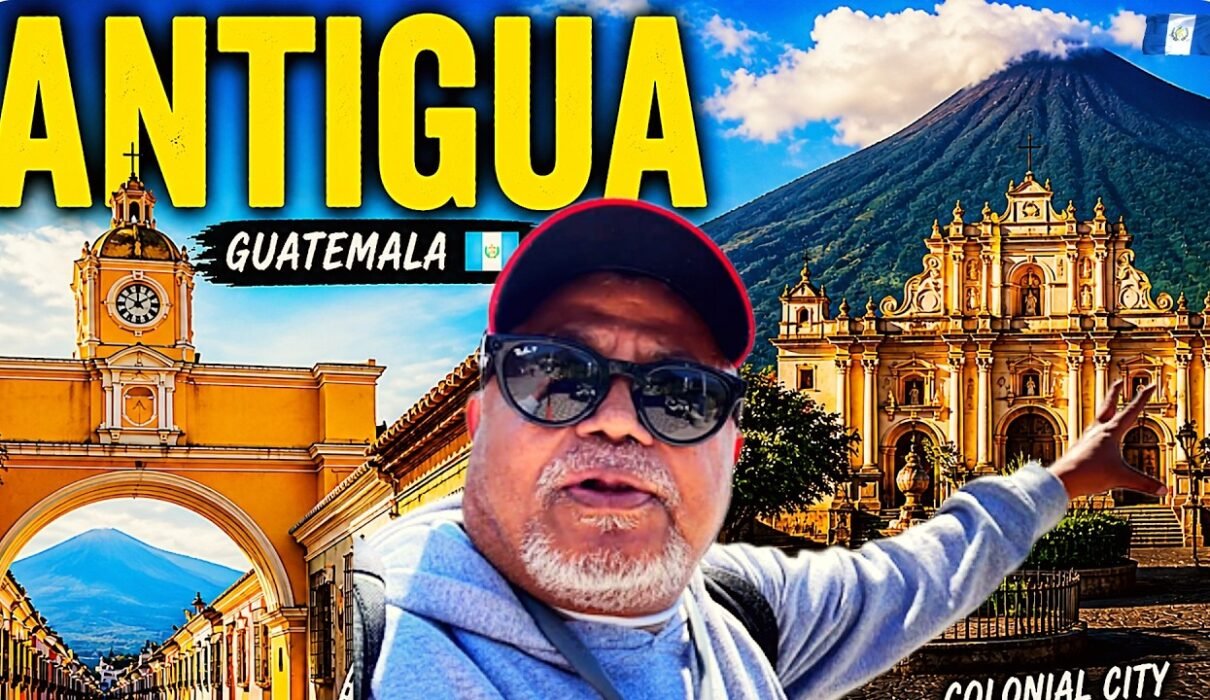
Then there is the Santa Catalina Arch — perhaps the image most closely associated with Antigua.
The famous yellow arch frames the street in a way that makes it almost feel like a movie set. But unlike a movie set, this is a living city. People walk beneath the arch, vendors work nearby, photographers wait for the perfect shot, and daily life continues around these centuries-old landmarks.
That combination of history and ordinary life is what makes Antigua so interesting.
The City Comes Alive Through Its People
Antigua isn’t just about architecture.
Some of my favorite moments came from experiencing the city’s everyday atmosphere. Cafés and restaurants are scattered throughout the historic center, creating plenty of places to slow down and watch the city move around you.
At one point, I ended up in a restaurant packed with people watching the Super Bowl. It was a surprisingly international scene in the middle of Guatemala — travelers and locals sharing the same space, cheering at the screen and enjoying the evening.
Moments like that show another side of Antigua.
Despite its historic appearance, this isn’t a museum frozen in time. It is a functioning, energetic city where Guatemala’s traditions exist alongside international travelers, modern restaurants, nightlife, and backpacker culture.
Antigua Before the Crowds
One of the best decisions was getting out early.
Antigua changes dramatically in the morning. Before the streets become busy, the city feels calm and almost dreamlike.
The early light reflects off brightly painted buildings. The cobblestones are quieter. Shopkeepers begin opening their doors, and the streets gradually start preparing for another day.
With fewer people around, it becomes much easier to appreciate the details — old wooden doors, faded walls, hidden courtyards, weathered stone, and architectural features that can easily be missed when the streets are crowded.
And then there are the volcanoes.
Volcán de Agua rises dramatically beyond the city, creating one of the most memorable backdrops in Guatemala. Seeing the volcano from Antigua adds another dimension to the experience: you’re not only surrounded by history, but by an enormous natural landscape as well.
Getting Lost Is Part of the Adventure
Antigua rewards people who are willing to wander without a strict plan.
Instead of following a checklist of attractions, I spent hours walking through side streets and discovering places almost by accident. Ruins appeared around unexpected corners. Small markets and local businesses provided glimpses into everyday life. Every few minutes there seemed to be another photograph waiting to be taken.
This is one of those destinations where getting slightly lost can actually improve the experience.
The most memorable parts of a trip aren’t always the famous landmarks. Sometimes they’re the quiet street you didn’t know existed, the restaurant you entered without a plan, or the view you discovered while taking a wrong turn.
And Then Came Another Race
Of course, the peaceful atmosphere couldn’t last forever.
With another shuttle waiting to take me onward, the relaxed walking tour eventually turned into another sprint through the streets.
Backpacking has a funny way of balancing beautiful travel moments with complete logistical chaos.
One minute you’re standing beneath a centuries-old arch admiring the architecture. The next, you’re running through the city trying not to miss your transportation.
And honestly, those unexpected moments often become part of the story.
Why Antigua Stays With You
What makes Antigua special isn’t one particular church, plaza, ruin, or viewpoint.
It’s the combination.
You have colonial architecture and ancient ruins, colorful streets and volcanic landscapes, quiet mornings and energetic evenings. You can spend the day photographing historic buildings and finish the night sitting in a busy restaurant surrounded by people from around the world.
The city manages to preserve a strong connection to its past without feeling disconnected from the present.
That is probably why the idea of “time travel” feels so appropriate here.
Antigua doesn’t literally take you back in time. Instead, it gives you the feeling of moving between different eras as you walk through its streets.
One moment you’re looking at architecture that has survived for generations. The next, you’re drinking coffee at a modern café or watching a major sporting event with travelers from across the globe.
A Place Worth Slowing Down For
If Guatemala is on your travel list, Antigua deserves more than a quick stop.
Give yourself time to walk. Wake up early. Explore the streets after dark. Look beyond the famous landmarks. Find a quiet café, visit the historic ruins, and take time to simply observe the rhythm of the city.
And don’t worry if your plans don’t go perfectly.
Missed shuttles, rushed departures, wrong turns, and unexpected encounters are all part of the adventure.
For me, Antigua was more than another destination on a backpacking itinerary. It was a place where history, culture, architecture, nature, and everyday life came together in a way that felt almost unreal.
Sometimes travel isn’t about finding a place that looks completely different from home.
Sometimes it’s about finding a place that makes you stop, look around, and wonder what century you’re standing in.
And Antigua Guatemala does exactly that. 🇬🇹