
 By
By Madinah is a city that feels different from anywhere else. For pilgrims, it is not simply a destination on an Umrah itinerary—it is a place filled with faith, history, peace, and memories connected to the life of the Prophet Muhammad ﷺ.
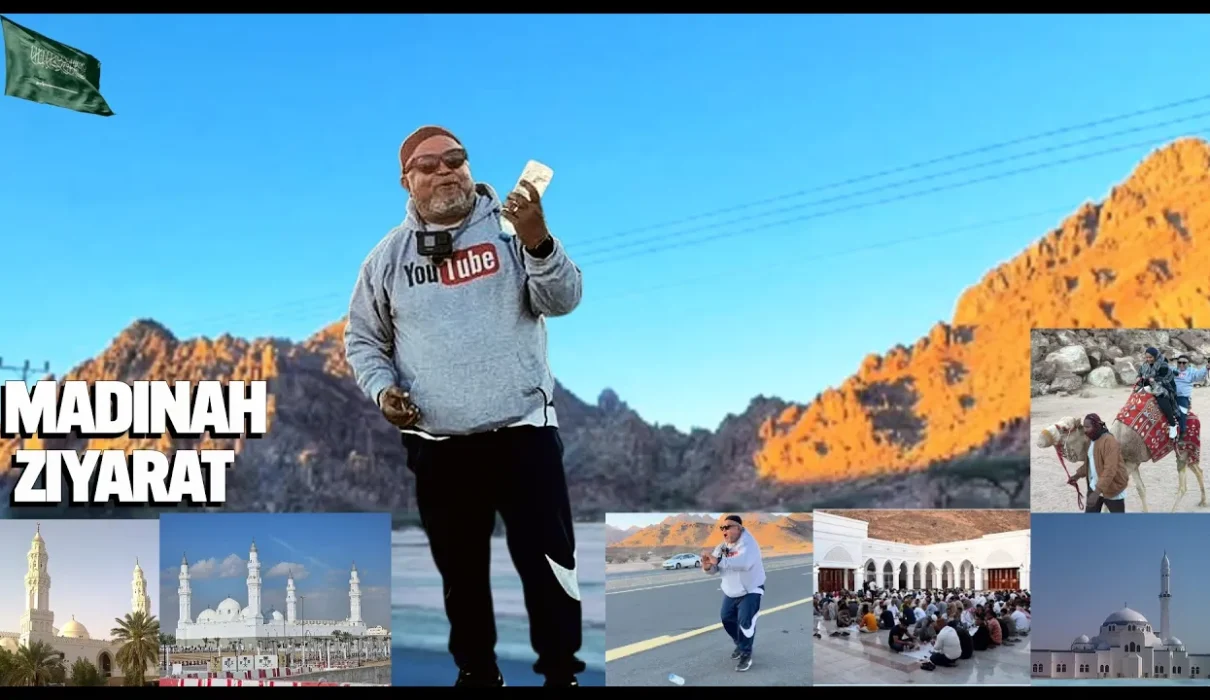
During our 13-day Umrah journey, we dedicated an entire day to exploring Madinah beyond the familiar surroundings of Masjid an-Nabawi. From an early morning prayer to historic mosques, date palms, Islamic landmarks, and an adventurous desert experience, the day became one of the most memorable parts of our journey.
Beginning the Day in Masjid an-Nabawi
Our day started while the city was still quiet. At around 3:20 in the morning, we made our way to Masjid an-Nabawi for Tahajjud.
There is something deeply moving about entering the Prophet’s Mosque in the early hours of the morning. The peaceful atmosphere, the rows of worshippers, and the anticipation of Fajr create an experience that is difficult to describe in words.
After Tahajjud, we remained for Fajr prayer. Beginning a day of exploration with worship in such a blessed place gave the entire journey a special sense of purpose.
Once the prayer was complete, it was time for breakfast before setting out for our Ziyarat tour.
Exploring Madinah With a Local Guide
After breakfast at Gulshan Restaurant, we met our guide, brother Kader, who accompanied us throughout the day’s journey.
Having someone explain the background of the places we visited made the experience much more meaningful. Madinah contains countless reminders of the sacrifices, struggles, and achievements of the first Muslim community, and seeing these locations in person can make Islamic history feel much more tangible.
Quba Mosque: A Place of Special Significance
One of the first major stops was Masjid Quba.
Quba Mosque holds an extraordinary place in Islamic history as the first mosque established by the Prophet Muhammad ﷺ after his arrival in the area of Madinah. For pilgrims, visiting the mosque is often one of the highlights of a Madinah itinerary.
Walking into Quba, there is a sense of simplicity and serenity. It is easy to imagine why generations of Muslims have considered a visit here an important part of their journey.
For anyone planning Umrah, adding Quba Mosque to a Madinah Ziyarat schedule can provide an opportunity not only to pray but also to reflect on the beginnings of the Muslim community.
Remembering the Battle of the Trench
Our next stop was the area associated with Masjid al-Khandaq and the Battle of the Trench.
The Battle of the Trench, also known as the Battle of Ahzab, was a significant event in the history of Madinah. The Muslims faced a powerful coalition, and the defensive trench became a crucial part of the strategy used to protect the city.
Standing at a location connected with such an important chapter of Islamic history encourages visitors to think beyond the modern city around them. These places are reminders of the difficulties faced by the early Muslims and the determination with which they protected their community.
Among the Palm Trees of Madinah
Madinah is also famous for its date palms, and our Ziyarat journey included a visit through the city’s date-growing areas.
The sight of rows of palm trees is an unforgettable part of the Madinah landscape. Dates have long been associated with the region, and visitors often make a point of purchasing dates to take home for family and friends.
Ajwa dates, in particular, hold a special place in Islamic tradition and are among the most sought-after varieties by pilgrims visiting Madinah.
Beyond shopping, however, walking through the date-growing areas offers another perspective on the city—one connected to agriculture, local traditions, and the natural environment surrounding Madinah.
The Mystery of Wadi al-Jinn
One of the more unusual stops of the day was Wadi al-Jinn, a valley outside Madinah that has become famous among visitors for a curious road phenomenon.
Vehicles on the road can appear to move uphill even when the engine is switched off. Because of this unusual visual effect, the location is sometimes described as a “magnetic hill.”
The experience is certainly intriguing. However, the phenomenon is generally explained through an optical illusion caused by the surrounding landscape and the way the road’s gradient appears to the eye.
Whatever the explanation, Wadi al-Jinn has become a popular stop for people looking to experience something different during their Madinah trip.
A Visit to the Islamic University of Madinah
The journey continued to the Islamic University of Madinah, one of the city’s most internationally recognized educational institutions.
The university has welcomed students from many different countries, providing education in Islamic studies and related disciplines. Its international character reflects the global reach of Madinah as a center of Islamic learning.
Seeing an institution where students from around the world come together to study Islam adds another dimension to the Madinah experience. The city’s significance is not limited to its historical sites; it remains an important place for religious education and scholarship.
A Peaceful Stop at Masjid al-Qur’an
Another stop on the itinerary was Masjid al-Qur’an.
The mosque provided a quieter and more reflective part of the day’s journey. After visiting busy landmarks and historic locations, spending time in a peaceful environment dedicated to the Qur’an offered an opportunity to slow down and reflect.
A Ziyarat tour does not have to be only about moving from one attraction to another. The most meaningful moments can sometimes come from simply pausing, praying, and thinking about the history and faith connected with the places around you.
A Desert Experience With Camels
By this point, the day had already been filled with Islamic history and cultural experiences, but there was still one memorable activity ahead: camel riding in the Madinah desert.
For the family, this became a fun change of pace after a day of sightseeing and visiting historical locations. The desert landscape, camel ride, and family photographs created memories that were completely different from those made at the mosques and historical sites.
It was a reminder that an Umrah journey can contain many different kinds of experiences—moments of worship and reflection alongside opportunities to discover the landscape and culture of the region.
More Than Just a Sightseeing Tour
What made this Madinah Ziyarat day special was the combination of different experiences.
We began in worship at Masjid an-Nabawi, then followed a route through some of Madinah’s important historical and cultural locations. Each stop offered something different: Quba connected us to the early Muslim community, Khandaq brought the struggles of the Sahabah to mind, the date gardens showed another side of Madinah, and the Islamic University highlighted the city’s continuing role in religious education.
Even the visit to Wadi al-Jinn and the camel ride added variety to the day.
Planning Your Own Madinah Ziyarat
For first-time visitors, a well-planned Ziyarat day can make a trip to Madinah much more rewarding. Rather than rushing between locations, it is worth learning a little about the history behind each site before visiting.
A comfortable schedule is also important. Madinah’s climate can be demanding, particularly when spending extended periods outdoors, so carrying water, wearing comfortable clothing and footwear, and allowing time for rest can make the experience easier.
Most importantly, visitors should approach historical and religious sites with respect and avoid treating sacred places simply as tourist attractions.
A Day to Remember
By the end of the day, we had experienced far more than a conventional sightseeing tour.
From standing for prayer in the peaceful hours before dawn to walking through places connected with the early history of Islam, the day offered countless opportunities to reflect. The camel ride and desert experience added a lighter, family-friendly memory to an otherwise deeply spiritual journey.
Madinah has a way of bringing history and faith together. Its streets, mosques, landscapes, and institutions all tell different parts of a story that has shaped the lives of Muslims around the world.
For anyone preparing for Umrah, a Madinah Ziyarat tour can be much more than a checklist of places to visit. With the right mindset, every stop can become an opportunity to learn, remember, and appreciate the remarkable legacy of Islam.
And sometimes, the memories that stay with you longest are not the ones you planned—they are the quiet moments between the destinations, the prayers before sunrise, the conversations with family, and the feeling of being together in a city so deeply connected to Islamic history.